The 2026 British Transplant Games came to Sheffield from 6–9 August 2026, bringing together transplant recipients, living donors, donor families, supporters, and volunteers for four extraordinary days of sport, celebration, and remembrance.
For QUOD Biobank, the Games provided a particularly meaningful opportunity to celebrate the people at the heart of transplantation and to recognise the generosity of organ donors and their families.
A record-breaking Games
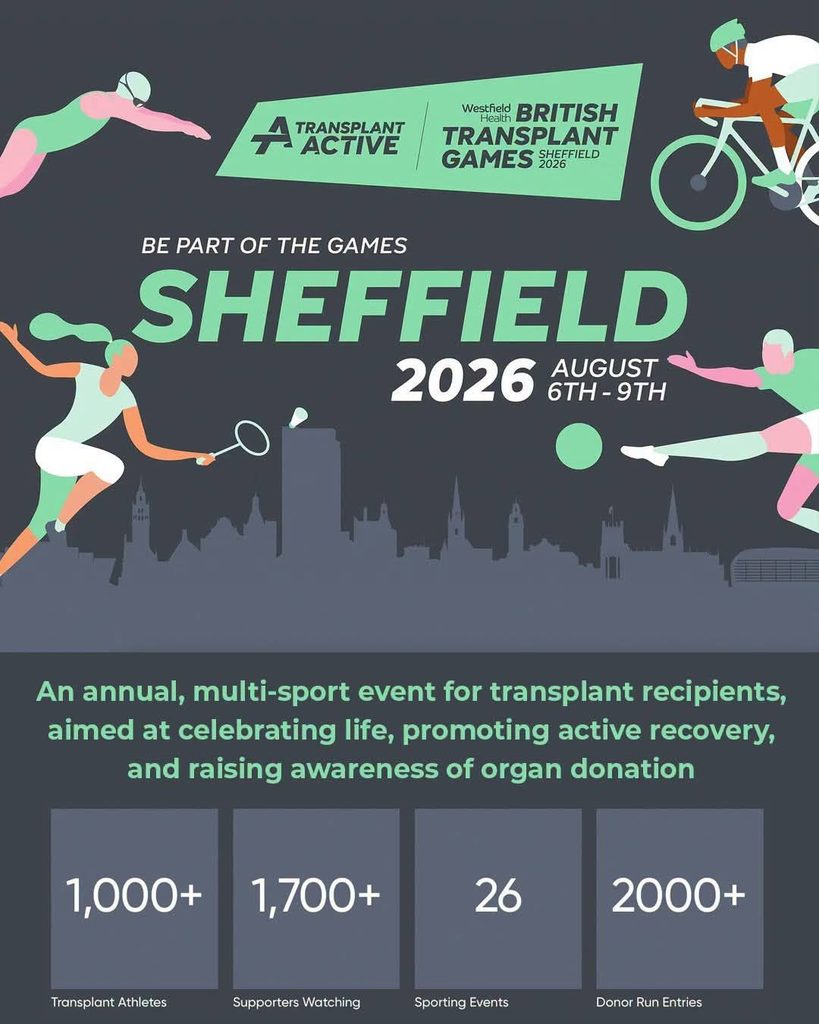
The 2026 Games were the largest British Transplant Games to date, with 2,857 people registered to take part. This included 1,124 transplant and stem-cell recipients competing across 26 sports, alongside 219 living donors and more than 1,500 supporters. Around 200 volunteers and 52 volunteer therapists also helped make the event possible.
Across Sheffield, competitors took part in events ranging from athletics, swimming, and cycling to golf, snooker, and team sports. The Games are about much more than sporting achievement; they demonstrate the remarkable lives that transplant recipients can lead and provide a unique opportunity for people with shared experiences to come together.
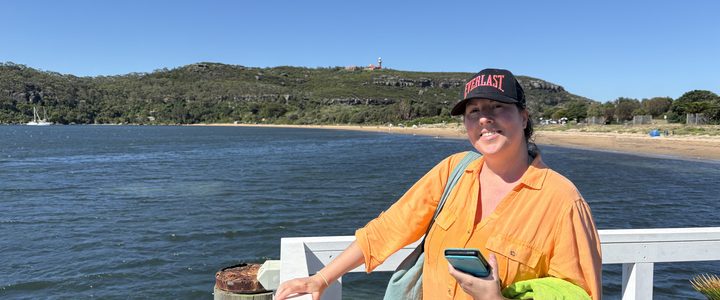
As Karen Rockell, a liver transplant recipient and member of the QUOD Biobank Steering Committee, and chair of the QUOD Lay Advisory Group (QLAG) reflected following the 2026 Games, “the sense of camaraderie and support is difficult to describe. The Games bring together people who understand the highs and lows of the transplant journey, while also providing an opportunity to meet donor families and together celebrate the gift of life.”
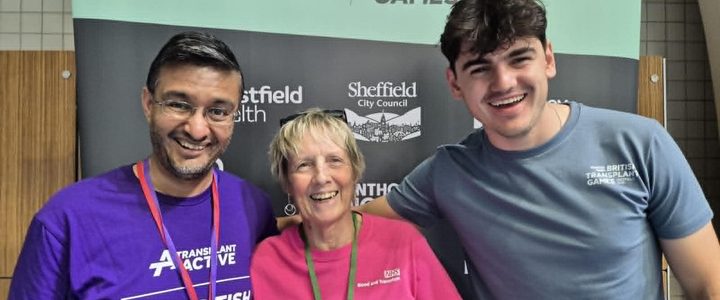
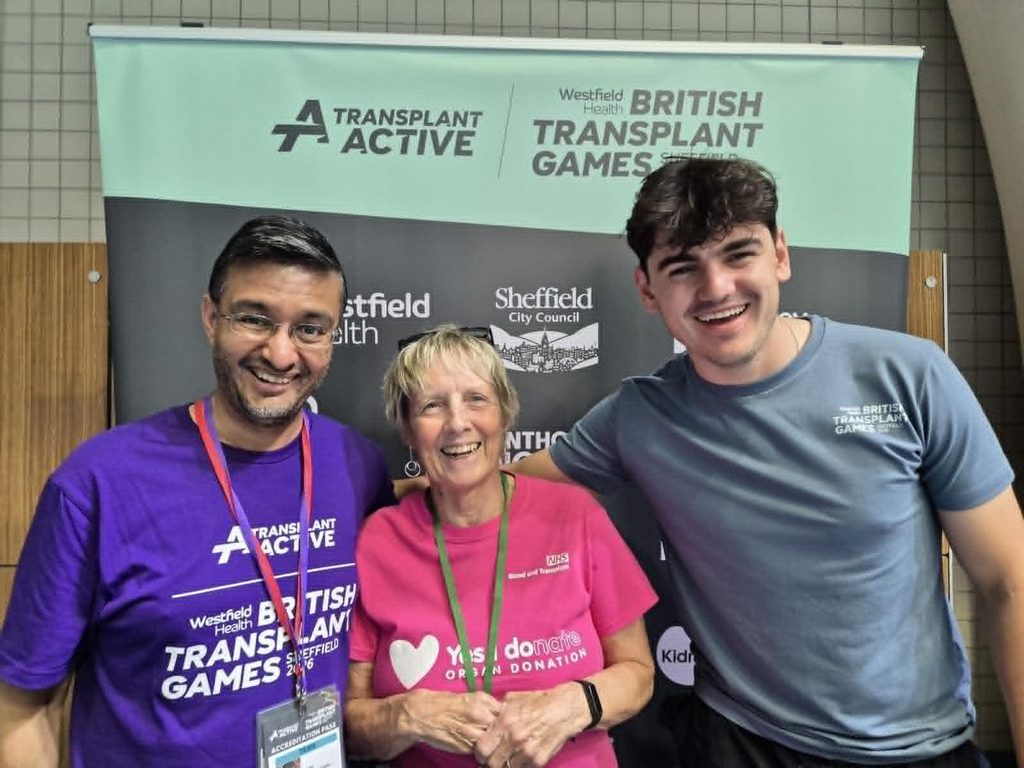
It was also brilliant to meet up with fellow QLAG members Andy Prigg, a double transplant recipient representing the Birmingham Transplant Team, and Mahmud Nawaz, Chair of Sheffield Teaching Hospitals NHS, member of the Donor Family Network, and NHSBT Organ Donation Ambassador.
Remembering donors
One of the most moving elements of the Games is the Donor Run. Held in Sheffield city centre on Saturday 8 August, the event brought together transplant recipients, donor families, living donors, and members of the public to raise awareness of organ and stem-cell donation and to honour those whose generosity has given others a second chance at life.
More than 2,500 people took part, filling Barker’s Pool with an atmosphere of energy, celebration, and remembrance.
The significance of the event was brought into sharp focus when Liz Phillips and her daughter Jade met Steve Whelan, the recipient of Liz’s late husband Rick’s liver. Rick died suddenly in 2020, and Steve’s transplant had given him the opportunity to continue living his life. The three walked the Donor Run together in tribute to Rick.
Stories such as this capture what makes the Transplant Games so special. Behind every transplant is a human story: of generosity, loss, hope, recovery, and, ultimately, life.
QUOD Biobank joins the celebration
Although QUOD Biobank’s work is focused on research rather than sporting achievement, the connection to the Games is profound. QUOD Biobank exists because donor families generously consent or authorise the use of samples from organ donors for research. These samples, paired with rich clinical data, are made available to researchers to help improve our understanding of transplantation and, ultimately, benefit future patients.
The Games therefore provide an important reminder of why this research matters. Every sample collected through QUOD Biobank represents an opportunity to learn more about human organs, transplantation, and disease, with the potential to improve outcomes for future recipients.
Furthermore, the samples are increasingly being used in other research fields including diabetes and cardiac disease broadening the benefit to future patients.
Celebrating what is possible after transplant
The British Transplant Games send a powerful message: transplantation is not simply about survival. It can enable people to return to active, fulfilling lives and achieve things they may once have thought impossible.
The achievements of the athletes in Sheffield, whether competing for medals, taking part for the first time, or simply crossing the finish line, are a celebration of that second chance.
For everyone involved in QUOD Biobank, the Games were also a reminder of the wider community that makes transplantation possible. From donors and their families to Specialist Nurses in Organ Donation, retrieval teams, clinicians, researchers, and transplant recipients, progress in transplantation depends on people working together.
As QUOD Biobank continues to support research, we are proud to celebrate the generosity, resilience, and determination represented by the British Transplant Games.
A huge congratulations to all the athletes and our heartfelt thanks to the donors, donor families, volunteers, and everyone who made the 2026 Games such a memorable event.
Sheffield 2026 showed us, once again, that the gift of life is something to celebrate. We are looking forward to Birmingham holding the games in 2027.